
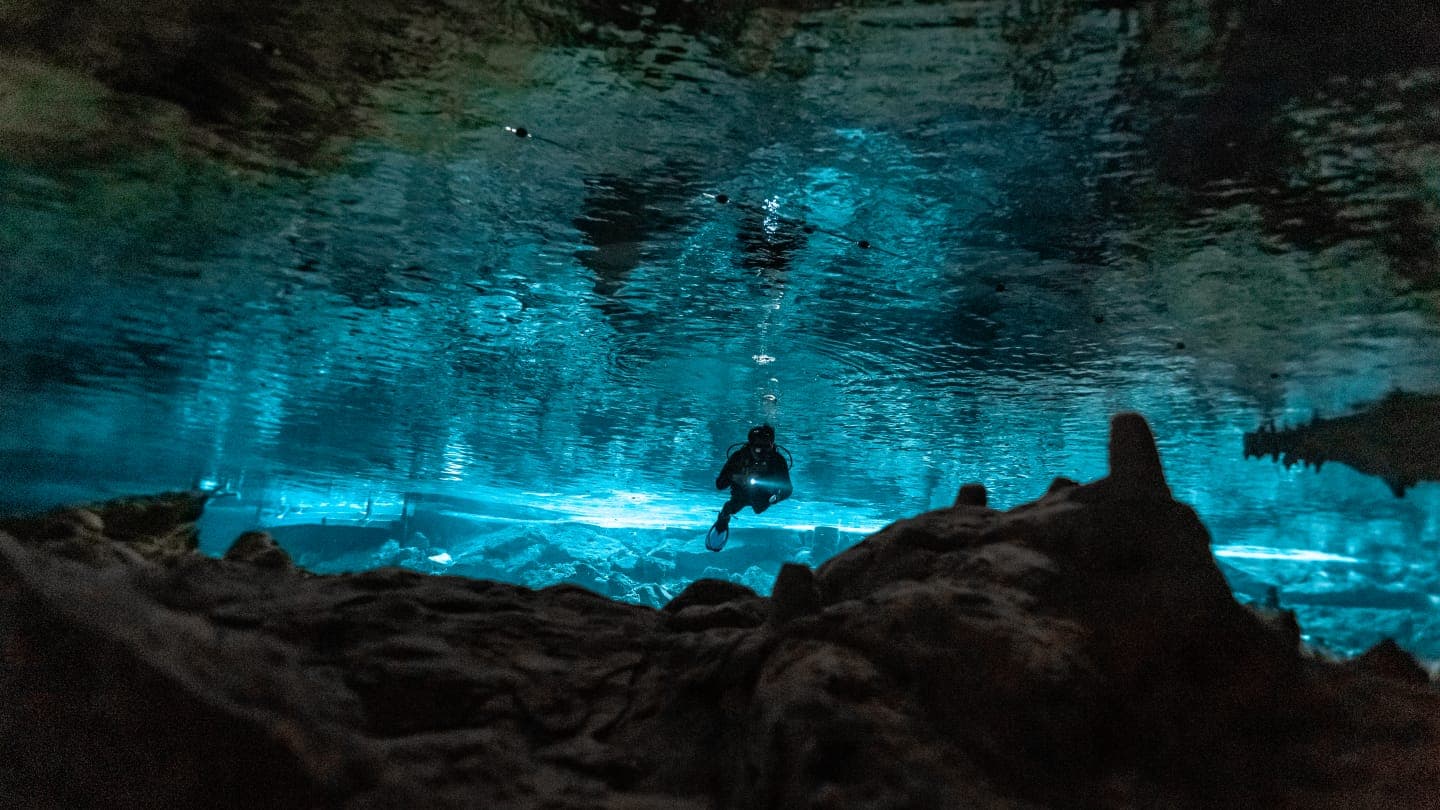
DISCOVERING THE CENOTES
The word cenote from the Mayan language, where "dz'onote" means sacred well, are natural treasures in the heart of the Yucatan Peninsula in Mexico. They fascinate with their beauty and historical importance for local communities.
THERE ARE SEVERAL TYPES OF CENOTES:
- Open cenote: visible on the surface, often in the shape of a sinkhole with a celestial opening.
- Semi-open cenote: partially covered, combining underground and visible aspects.
- Closed cenotes (underground): completely below the surface.
WHY ARE THEY SO IMPORTANT TO THE COMMUNITY?
Cenotes play a vital role in local life for several reasons:
- Freshwater reserve: they constitute a precious source of drinking water.
- Sacred places: considered as passages to the underworld, Xibalba, they were ceremony sites for the ancient Maya.
- Village construction: many civilizations built their villages around these sites, taking advantage of their abundance.
THE IMPORTANCE OF PRESERVING CENOTES
It is crucial to protect these natural wonders to guarantee their sustainability. Their deep history is still studied through soil analysis, revealing information about ancient civilizations and their relationship with nature.
THE NEED TO PRESERVE NATURE
Cenotes are vulnerable to human activities such as pollution, urban development and excessive tourism. Their preservation not only conserves these sacred places, but also maintains the ecological balance of the region.
Cenotes are much more than simple water wells: they are symbols of culture, spirituality, and biodiversity. By protecting them, we respect not only the history of the ancient Maya, but also our environmental future.
Kelly & Andres · 01/01/2025